

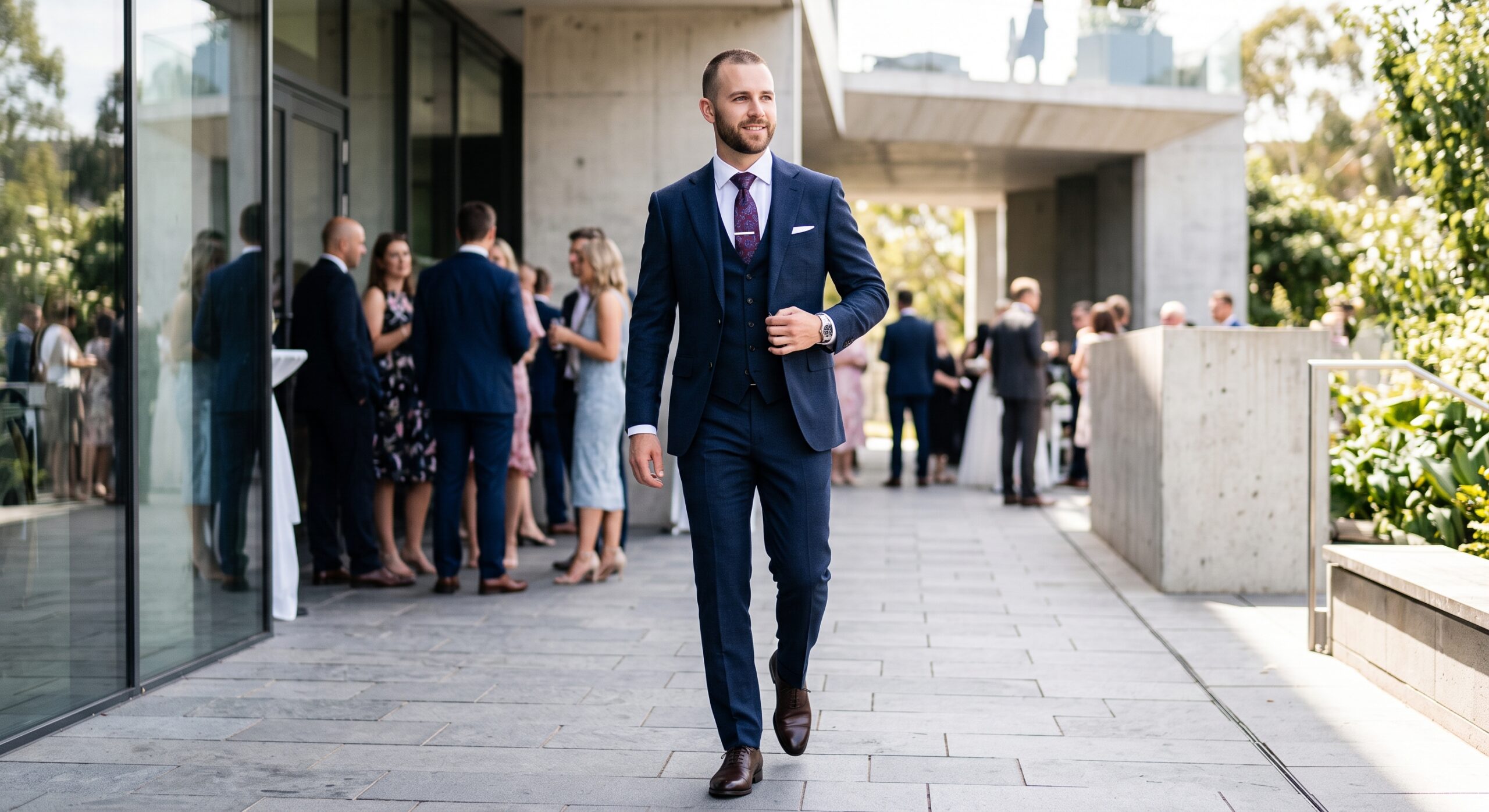
A three-piece suit can look highly formal, but that does not mean it must spend most of its life in a garment bag. Its jacket, trousers and waistcoat give you several useful combinations for weddings, work events, race days and dinners. Worn together, the pieces create a polished outfit with a clear sense of occasion. Remove the waistcoat and the same suit becomes a familiar two-piece. On a relaxed evening, the waistcoat can even be worn with separate trousers, provided the colours and textures sit comfortably together.
Choosing 3-piece suits for your usual occasions
When comparing 3 piece suits, begin with the setting in which you expect to wear yours most often. A smooth navy or charcoal cloth works well when the dress code may change between professional and formal. Textured tweed, herringbone and checked cloths carry more character and are often a good match for rustic weddings, winter events and heritage-inspired outfits. TruClothing carries options across these styles, making it possible to compare restrained designs with more noticeable patterns in one place.
Colour affects versatility as much as fabric. Navy works with white, pale blue and soft pink shirts, and it accommodates black or brown footwear. Mid-grey is similarly adaptable and can be made more formal with black shoes or softened with dark brown leather. Tan, green and burgundy have a stronger identity, so they require more thought about the shirts, ties and shoes already in your wardrobe.
If this is your only formal suit, a quieter colour usually offers more mileage. Men who already own dependable navy or grey tailoring have more room to consider a stronger check, an earthy shade or a contrasting waistcoat. The point is to fill a genuine gap rather than buy another version of something that rarely leaves the wardrobe.
The time of day also matters. Dark, smooth tailoring tends to feel more appropriate at formal evening events. Lighter colours and textured cloths suit many daytime weddings, race meetings and outdoor celebrations. These are useful guidelines rather than fixed rules, but they can help narrow a large collection to the styles most likely to be worn.
Why the waistcoat is more practical than it appears
The waistcoat is sometimes treated as a decorative extra, yet it gives the suit much of its flexibility. During a ceremony, formal lunch or important business event, it creates a complete and structured outfit. When the jacket comes off later, the wearer still looks appropriately dressed rather than appearing to have abandoned the formal outfit.
This is particularly useful at long British weddings, where conditions may change several times during the day. The full suit works for the ceremony and photographs. The jacket can then be removed during a warm reception, leaving the waistcoat to keep the shirt and trouser waistband covered. If the temperature drops in the evening, the jacket can be put back on without another outfit change.
A waistcoat can also help define the difference between members of a wedding party. The groom might wear all three matching pieces while the groomsmen use the jacket and trousers as two-piece suits. Another option is to give the groom a contrasting waistcoat while keeping the remainder of the tailoring consistent. One clear difference is usually more effective than adding several decorative accessories.
How the waistcoat should fit
The waistcoat should sit close to the body without pulling at the buttons or restricting a full breath. Its front needs to cover the waistband of the trousers so that no shirt appears between the two. This relationship is easier to achieve with trousers that sit at the correct height. If the trousers are worn too low, tightening the waistcoat will not solve the resulting gap.
A small amount of adjustment is normally available through the strap at the back, but that strap cannot correct a waistcoat that is fundamentally too small or too large. Pulling it too tightly can create folds at the sides and distort the front. Use it to refine the fit after selecting the correct size.
Keep the bottom button undone on a traditional single-breasted waistcoat. The remaining buttons should fasten cleanly, with the cloth lying flat across the chest. Shirt fabric should not bunch heavily around the armholes or sides.
Check the fit while sitting as well as standing. A waistcoat may look correct in front of a mirror but feel restrictive during a meal or long journey. Sit down, take a full breath and reach forward naturally. If the buttons pull sharply or the armholes press into the body, try another size rather than assuming discomfort is part of formal dressing.
Getting the jacket and trousers right
Begin with the shoulders because they are difficult and costly to alter. The jacket seam should end where the shoulder naturally ends, without a dent or overhang. When fastened, the front should close without an X-shaped pull around the button. The collar needs to sit against the shirt collar rather than leaving a visible gap.
Sleeves commonly finish near the wrist bone, allowing a narrow line of shirt cuff to show. Exact sleeve length depends on the wearer’s proportions and shirt, so take the intended shirt to any alteration appointment. Correcting a slightly long sleeve is usually more practical than trying to repair badly fitting shoulders.
Jacket length should also be judged in relation to the complete suit. Very short jackets can expose too much of the waistcoat and make the outfit appear unbalanced. View the suit from the side and back, not only from the front. The vents should remain closed while standing naturally, and the hem should sit level.
Trousers need to remain comfortable when sitting and fall cleanly over the shoe. A slight break is a safe choice for a classic outfit, while little or no break creates a cleaner contemporary line. Avoid trousers so narrow that they catch on the calf or pull across the pockets. Tailoring looks composed when the fabric hangs properly, not when every part grips the body.
If the waistcoat fits correctly but the jacket or trousers need minor work, a tailor can often adjust sleeve length, trouser hems or the jacket waist. Ready-to-wear clothing follows standard proportions, so a small alteration is normal. Allow enough time before the event for the work to be completed and checked.
Matching the fabric to the season
Fabric choice influences comfort as well as appearance. Tweed, herringbone and denser wool-rich cloths suit cooler conditions and often complement country houses, barns and traditional venues. Their visible texture gives the suit depth and can make a restrained colour feel more distinctive.
Lighter cloths and blends are easier to manage during spring and summer events, although the product details should always be checked. A pale colour does not automatically mean a lightweight suit. Lining, construction and the number of layers all affect how warm the outfit feels.
A three-piece can still work during warmer weather when the fit allows movement and the event schedule has been considered. The full suit may be needed for the ceremony, but the jacket can often come off later. A breathable shirt and a spare shirt for the evening can improve comfort without changing the main outfit.
British weather makes rigid seasonal rules unreliable. A June wedding may be cold and wet, while an early autumn celebration can be warm. Consider the venue, time outdoors and likely temperature rather than buying according to the month alone.
Shirts, ties and shoes that keep the outfit balanced
A three-piece suit already carries more visual detail than a two-piece, particularly when it includes a check, textured fabric or contrasting waistcoat. Simple accessories often produce the strongest result.
With a checked or textured suit, choose a plain shirt and a tie that picks up one of the quieter colours in the cloth. A white shirt provides the cleanest and most formal base. Pale blue works naturally with navy, grey and many brown suits, while cream can complement some tan and earthy designs.
A plain suit leaves more room for a patterned tie, although small-scale patterns are easier to combine than bold competing checks. A pocket square can add contrast, but it does not need to match the tie exactly. Identical tie and pocket-square sets can make the outfit look packaged rather than individually considered.
Black Oxfords are dependable with charcoal, black and darker navy. Brown Derbies, brogues or loafers can soften navy, tan and many tweed suits. The footwear should reflect the setting as well as the suit. Highly polished Oxfords suit formal ceremonies and evening events, while brogues and Derbies sit comfortably with textured country tailoring.
If a belt is worn, keep its colour close to the shoes. Some suit trousers include side adjusters, which remove the need for a belt and allow the waistcoat to lie more smoothly. Braces can provide similar support when the trousers are designed to accommodate them, although they should remain hidden beneath the waistcoat.
Separating the three pieces without looking mismatched
Using the pieces separately can extend the life of the suit, but some combinations work better than others. A textured or visibly checked jacket is usually easier to wear as a separate because it can resemble a blazer. Smooth, formal suit jackets may look like half of a missing suit when paired with unrelated trousers.
Choose a clear contrast. A navy checked jacket may work with mid-grey trousers, while a brown herringbone jacket can sit comfortably with dark navy. Avoid pairing two shades that nearly match, as the small difference can look like a mistake.
The waistcoat can be worn with contrasting tailored trousers for dinners, race days and other smart occasions. Keep the shirt plain and make sure the trouser rise is high enough to meet the waistcoat. Jeans are harder to combine successfully because their weight and casual construction may clash with formal waistcoat fabric.
Use separates in moderation. If the jacket is worn frequently while the trousers remain stored, sunlight, friction and cleaning can cause the pieces to age at different rates. Rotate them carefully so that the full suit still looks consistent when brought back together.
Making one suit work across the day
At a wedding ceremony or formal lunch, wear all three pieces with a tie and polished shoes. The jacket should normally remain fastened while standing and be unfastened when sitting. Later, the jacket can come off while the waistcoat keeps the outfit looking finished.
For a business event, leave out the waistcoat and use the jacket and trousers as a conventional two-piece. A white or pale blue shirt and restrained tie reduce the ceremonial association. If the event continues into dinner, the waistcoat can be added when the suit and dress code make that practical.
Race days and other daytime occasions leave more room for colour and texture. A checked three-piece can be worn with a plain shirt, matte tie and brown leather shoes. At a less formal evening gathering, removing the tie may be suitable, provided the shirt collar holds its shape and the rest of the outfit remains tidy.
These changes work because the main fit has already been resolved. Constantly adding accessories cannot rescue a jacket that pulls or a waistcoat that exposes the shirt. The suit should look complete before decorative details are introduced.
Caring for a suit that is meant to be worn
After wearing the suit, empty the pockets and give each piece time to air before returning it to the wardrobe. Use a broad, shaped hanger for the jacket so the shoulders remain supported. Trousers can be hung from the waistband or cuffs to help the cloth and crease settle.
A clothes brush removes surface dust and small particles that can work into the fabric. Deal with stains promptly, following the care label or seeking advice from a professional cleaner. Avoid dry cleaning after every brief wear. Repeated chemical treatment can place unnecessary strain on the cloth and construction.
Check buttons, pocket corners, lining and trouser hems after important events. A loose button or dropped hem is easier to repair before it causes further damage. Keep any spare buttons in a labelled envelope so they can be found when needed.
Store the suit in a breathable garment cover rather than sealed plastic, and give it enough wardrobe space to prevent the lapels and shoulders from being crushed. Bring it out several days before the next occasion to check the fit and allow time for pressing or alterations.
A modern three-piece suit earns its place through use. Chosen for a real diary, fitted properly and styled with restraint, it can move between formal and professional settings without feeling like the same fixed outfit each time. The waistcoat adds distinction, but the lasting value comes from having three coordinated pieces that can respond to the occasion rather than waiting for one perfect event.
