

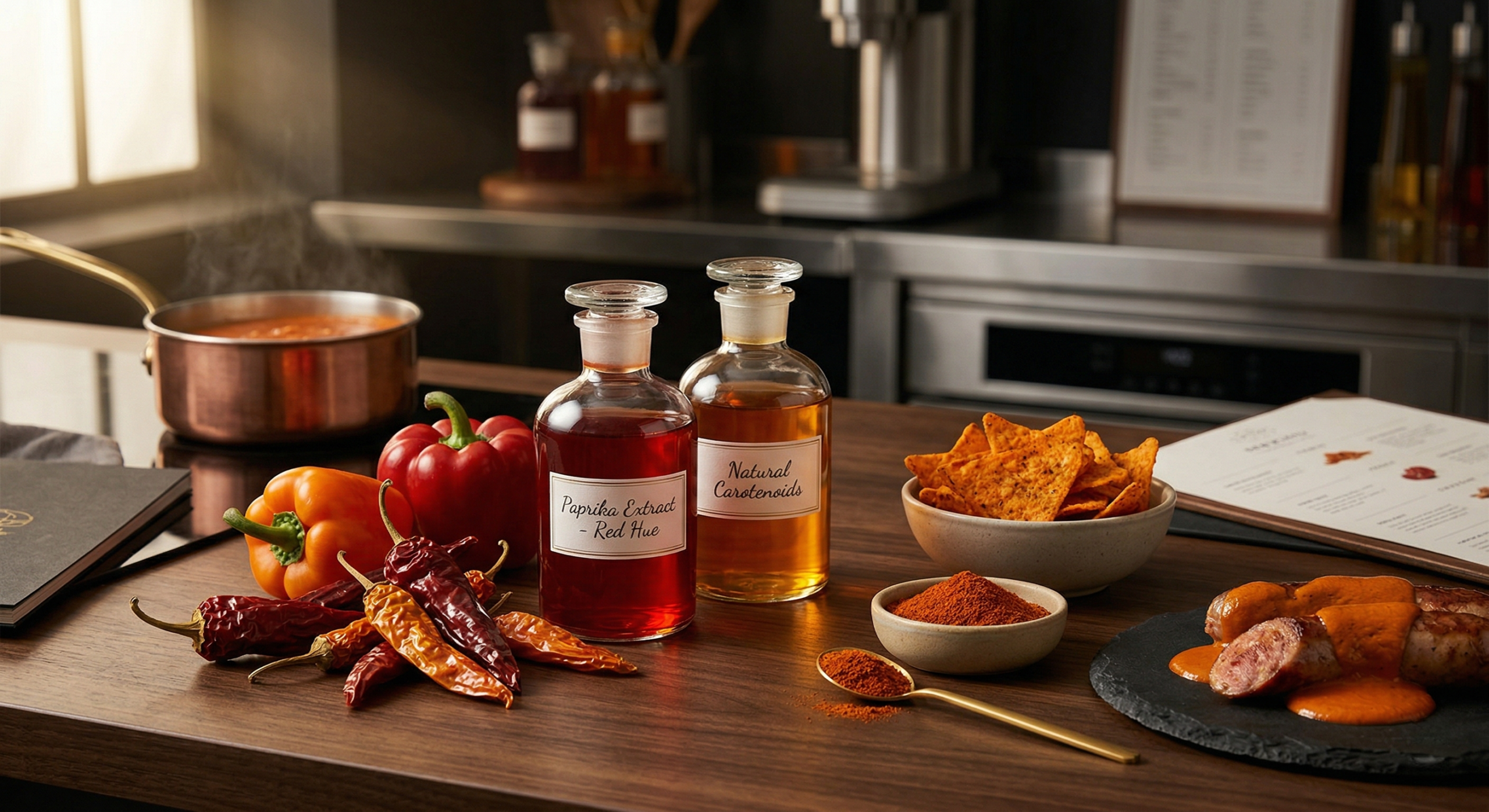
Color is one of the first promises a food product makes. A deep red snack suggests bold flavor. A warm orange sauce feels rich and comforting. But increasingly, consumers aren’t just asking what color is this?they’re asking where does it come from?
This shift has brought natural food colors into sharp focus. And among the many plant-based options available today, paprika food colors have emerged as one of the most practical and widely used solutions for red and orange shades.
Why Natural Food Colors Are Gaining Ground
The move toward natural ingredients is no longer limited to niche or premium brands. It’s becoming an industry-wide expectation.
Consumers today:
- Prefer familiar, plant-based ingredients
- Avoid artificial additives when possible
- Associate natural products with better quality
For food manufacturers, this creates both an opportunity and a challenge. Natural colors can enhance brand trust—but they also require more careful handling than synthetic alternatives.
What Are Paprika Food Colors?
Paprika food color is derived from dried red peppers (Capsicum species). The pigment responsible for its color comes from carotenoids, primarily capsanthin and capsorubin.
These pigments give paprika its characteristic:
- Red
- Orange
- Deep warm tones
Depending on processing and concentration, paprika extracts can deliver a wide range of shades suitable for different applications.
What Makes Paprika a Preferred Natural Color
Among natural food colors, paprika stands out for its balance of performance and versatility.
1. Strong, Warm Shades
Paprika provides rich red to orange hues that are difficult to achieve consistently with some other natural sources.
2. Good Oil Solubility
Paprika extracts are typically oil-soluble, making them ideal for fat-based systems like:
- Snacks
- Seasonings
- Processed foods
3. Relatively Better Stability
Compared to many natural colors, paprika performs well under:
- Heat (to an extent)
- Light exposure
- Processing conditions
This makes it a reliable option for industrial-scale food production.
Where Paprika Food Colors Are Commonly Used
Paprika is widely used across both savory and processed food categories.
Some common applications include:
- Snacks: Chips, extruded snacks, coated nuts
- Seasonings: Spice blends, dry mixes
- Processed foods: Ready meals, sauces
- Meat products: Sausages, marinades
- Dairy (limited): Certain cheese and spreads
Its ability to blend naturally into savory flavor profiles makes it especially valuable in these segments.
The Challenges Behind Paprika Colors
While paprika is relatively stable, it isn’t without its limitations.
1. Sensitivity to Oxidation
Exposure to oxygen can gradually reduce color intensity over time.
2. Flavor Carryover
In some applications, paprika extract may contribute a slight flavor, which needs to be managed carefully.
3. Limited Use in Water-Based Systems
Since most paprika colors are oil-soluble, they may not perform well in clear beverages or water-based formulations.
4. Shade Control
Achieving a precise shade can sometimes require blending with other natural pigments.
These challenges highlight the importance of proper formulation and ingredient selection.
The Role of Manufacturers in Paprika-Based Colors
Natural food colors are not just about extraction—they’re about application.
Manufacturers work on:
- Standardizing pigment concentration
- Improving stability through processing
- Offering customized shades
- Adapting solutions for different food systems
For example, a snack coating requires a very different formulation compared to a sauce or seasoning blend.
This is why collaboration between brands and ingredient experts is essential.
Paprika in the Bigger Natural Colors Landscape
Within the broader natural food colors category, paprika occupies a strong middle ground.
It offers:
- Better stability than many delicate pigments (like blue or green)
- More vibrant warm tones than some yellow sources
- Greater compatibility with savory products
This makes it a go-to choice for many manufacturers looking to transition away from synthetic reds and oranges.
The Future of Natural Food Colors
As demand continues to grow, natural food colors are evolving rapidly.
We’re seeing:
- Improved extraction techniques
- Better protection against oxidation
- More application-specific solutions
- Increased consistency in supply and quality
Paprika food colors will continue to play a key role, especially in savory and processed food categories where both color and functionality matter.
Final Thoughts
Natural food colors are reshaping how products are developed and perceived. But the transition from synthetic to natural isn’t always straightforward.
Paprika food colors offer a practical solution delivering warm, appealing shades with relatively strong performance.
They may not solve every coloring challenge, but in the right applications, they strike a balance between visual appeal, functionality, and clean-label expectations.
And in today’s food industry, that balance is exactly what brands are looking for.
Curious for more? Dive deeper on our site now! Daily Blooper
