

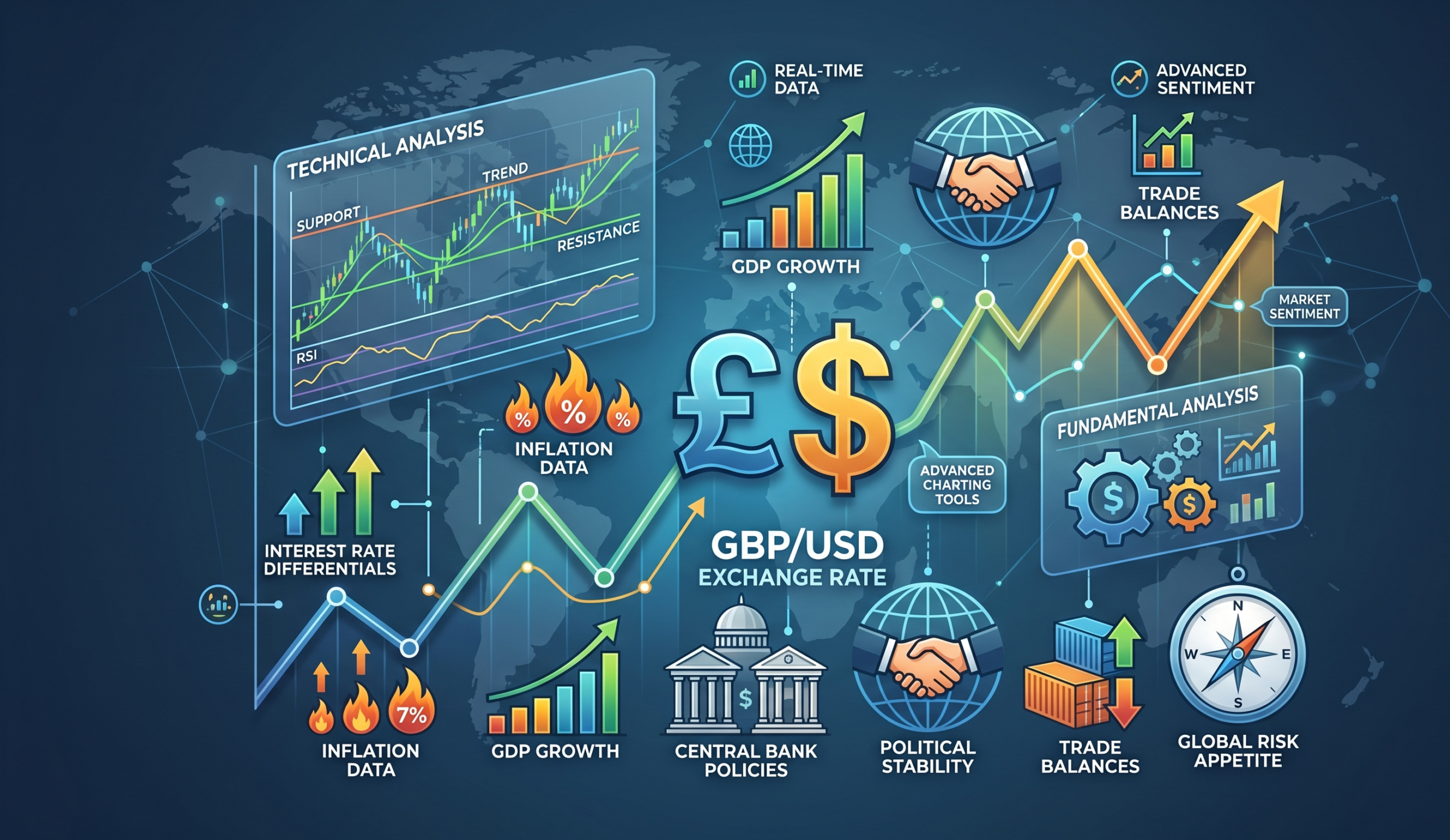
Currency movements rarely exist in isolation. They tend to mirror broader economic realities, investor sentiment, and policy direction across nations. Among global currency pairs, the pound versus the US dollar continues to draw consistent attention due to its deep liquidity and historical importance in international trade and finance.
Within this framework, the pound dollar exchange rate becomes more than a numerical quote. It represents the relative economic strength of the United Kingdom and the United States, while also acting as a real-time indicator of shifting capital flows, investor expectations, and global financial stability.
The Historical Context Behind GBP/USD Movements
The relationship between the British pound and the US dollar has evolved significantly over the past century. Earlier periods reflected British economic dominance, but the post-war era gradually positioned the United States as the primary financial power, reshaping currency dynamics.
Following the transition to floating exchange rates in the 1970s, the pair began reacting more freely to market forces. This shift introduced volatility, yet it also allowed currencies to better reflect economic fundamentals rather than fixed policy constraints.
Economic Indicators That Drive the Pair
Macroeconomic indicators remain central to currency valuation. Interest rates, inflation data, employment statistics, and GDP growth collectively shape investor expectations and influence capital allocation decisions across borders.
When one economy demonstrates stronger growth or higher returns, its currency often attracts more demand. Central bank policies, especially interest rate decisions, play a decisive role in reinforcing or reversing these trends over time.
Market Sentiment and Speculative Activity
Beyond measurable data, market psychology plays a powerful role in determining price direction. Traders often respond to expectations rather than confirmed outcomes, which can lead to rapid and sometimes exaggerated movements.
Speculative participation adds another layer of complexity. Institutional investors, hedge funds, and retail traders contribute to momentum, creating short-term price swings that may temporarily diverge from underlying fundamentals.
Key Factors Influencing Exchange Rate Volatility
Interest Rate Differentials
Differences in borrowing costs between economies influence where capital flows. Higher interest rates tend to attract foreign investment, strengthening the associated currency.
Political Stability
Stable political environments encourage investor confidence, while uncertainty can weaken a currency due to perceived risk and hesitation among global participants.
Trade Balances
Countries that export more than they import generally experience upward pressure on their currency. Persistent deficits can gradually reduce currency strength.
Global Risk Appetite
During uncertain periods, investors often gravitate toward safer assets. In such conditions, the US dollar typically gains traction, while risk-sensitive currencies respond differently depending on broader conditions.
The Role of Central Banks in Currency Movements
Central banks remain among the most influential forces in foreign exchange markets. Their decisions directly impact liquidity, inflation, and economic growth, all of which feed into currency valuation.
Policy announcements, interest rate adjustments, and forward guidance shape expectations long before actual changes take effect. Even subtle shifts in tone can trigger immediate market reactions, reflecting the sensitivity of currency markets to policy direction.
How Technology Enhances Market Analysis
Modern financial tools have transformed the way traders approach currency analysis. Access to real-time data, advanced charting capabilities, and customizable indicators allows for deeper insight into price behavior and trend development.
These platforms typically provide:
- Live price tracking across multiple timeframes
- Technical indicators for trend and momentum analysis
- Historical data for pattern recognition
- Sentiment tools that reflect trader positioning
Such features enable participants to interpret market conditions more effectively while refining their strategies.
Technical Analysis in GBP/USD Trading
Technical analysis focuses on interpreting price action through charts and statistical tools. Traders use patterns, indicators, and historical behavior to identify potential entry and exit points.
Common approaches include identifying support and resistance levels, analyzing trend lines, and using moving averages to smooth price fluctuations. These methods aim to improve timing while managing exposure to risk.
Fundamental Analysis and Long-Term Outlook
Fundamental analysis emphasizes economic strength, fiscal stability, and policy direction. Long-term investors rely on these factors to assess whether a currency is undervalued or overvalued relative to its counterpart.
Economic resilience, consistent growth, and stable governance typically support currency appreciation over extended periods. This approach contrasts with short-term trading, where immediate price movements take precedence.
Practical Strategies for Traders
Risk Management
Successful trading depends heavily on preserving capital. Setting predefined stop-loss levels and maintaining disciplined position sizing helps limit potential losses.
Diversification
Focusing on a single currency pair increases exposure to concentrated risk. Spreading investments across multiple instruments can provide a more balanced approach.
Timing Entry and Exit
Carefully selecting entry and exit points improves overall performance. Technical tools assist in identifying favorable moments while reducing emotional decision-making.
Staying Updated
Regular monitoring of economic releases and geopolitical developments ensures traders remain aligned with market-moving events and emerging trends.
Final Thoughts
Why does the pound dollar exchange rate remain one of the most closely watched indicators in global finance, despite the rise of multiple emerging markets and alternative assets? The answer lies in its ability to reflect economic strength, investor confidence, and monetary policy direction in real time, making it a cornerstone for both short-term trading and long-term analysis.
For those seeking deeper insights, platforms offer advanced charting tools, real-time data, and community-driven perspectives that help translate complex market behavior into actionable understanding, allowing traders to navigate currency movements with greater clarity and precision.
